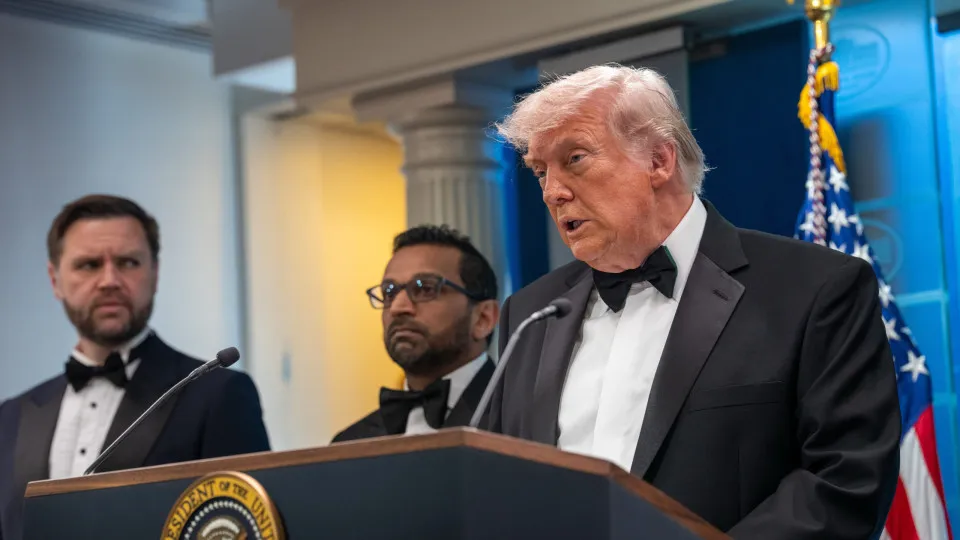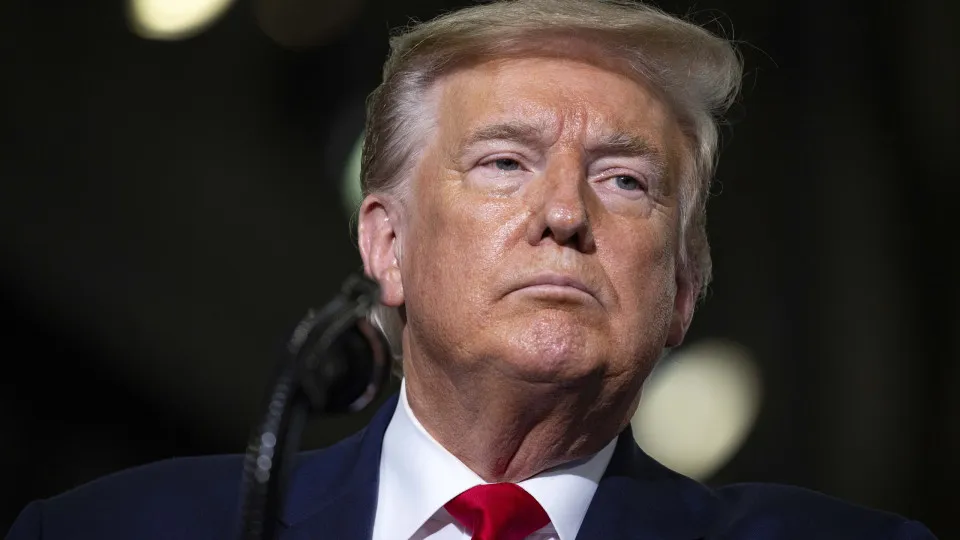
United States President Donald Trump stated that Iran accepted "practically everything" that Washington demanded, while highlighting that negotiations with Tehran continue.
"I think they've accepted pretty much everything we need," Trump said Thursday in an interview with CNBC. According to him, the two countries continue negotiating after the preliminary agreement reached on June 18, with the aim of advancing the negotiations.
Trump said the conflict with Iran is "not really a war" but rather a matter of "nuclearly disarming" the Islamic Republic.
Insisting that Iran cannot be allowed to have a nuclear weapon, the Republican said he had dismantled the Iranian Army, stating that, currently, the country "has no Navy, no Air Force, no radars."
After saying that all of the Asian country's leaders "are dead" and clarifying that he is not seeking "regime change", but rather to prevent Iran from having nuclear weapons, the American president stated that Washington maintains a good relationship with the leaders in power of the Islamic Republic. According to Trump, they are "much more rational."
Asked about the possibility of a "total blockade" by the United States in the Strait of Hormuz, Trump stated that the blockade imposed on Iranian ports, suspended after the signing of the memorandum of understanding between Washington and Tehran on June 18, "was not a blockade", but rather "a wall of steel", thanks to which "not a single ship was able to reach Iran".
"They have 300% inflation, they don't make any money. So we're going to keep some of that money and buy from them. They need food, corn, wheat and soybeans, and we're going to make sure that it's exclusively our North American farmers who supply them. Assuming we've reached the position we need to be in. I think we're going to make it," Trump said, after declaring that Iran has "lost its strength and arrogance."
Regarding the preliminary agreement, Tehran last week defended the need to comply with established commitments, while the Trump administration insisted on holding meetings between Tehran and Washington in Doha, the capital of Qatar.
The situation in Lebanon is, at the moment, the most fragile point of the agreement, after Israel reiterated that it will not leave the south of the country nor end military operations against the Shiite militia party Hezbollah. Meanwhile, Iran insists that the agreement reached with Washington also involves Lebanon.
/https://i.s3.glbimg.com/v1/AUTH_59edd422c0c84a879bd37670ae4f538a/internal_photos/bs/2026/Z/s/3ooVBsR7mxTMAXsyvTcw/2026-06-24t182421z-1573473901-rc2h0maekzvx-rtrmadp-3-peru-politics-fujimori.jpg)